

1. Home
  2. Research & Analysis
  3. Why Break Down Data?

Why Break Down Data?

Written By Lora Stephens

Sep 6, 2019

Why Break Down Data?

Written By Lora Stephens

Sep 6, 2019
Blog Default Image. Group of people sitting against a wall sharing things on electronic devices.

When you’re using data to make decisions, are you also taking time to break down data to learn more? Perhaps you are struggling to understand the needs of different parts of the population you serve. Maybe you’re noticing different outcomes in other groups but don’t know why. When you break down data, you can see what’s hidden within your overall results. 

One important reason to break down data is to help clients experiencing multiple adverse events. Our team at Transform Consulting Group worked with Coalition for Homelessness Intervention and Prevention (CHIP) to understand the challenges of people experiencing both homelessness and domestic violence. We took a close look at their data. Then we developed recommendations for how best to meet the needs of this population.

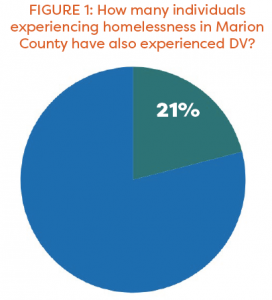
A significant portion of individuals who are homeless have also experienced domestic violence. In Marion County, 21% of individuals in the Homelessness Management Information System (HMIS) had lived in households with reported domestic violence (DV). 
DV-homelessness-data

Based on national best practices and local data, CHIP and its partners identified potential system and policy improvements. They gathered feedback from domestic violence survivors experiencing homelessness via surveys and focus groups. 

The data and research revealed the need for targeted public policy and legislative protections for this population. When domestic violence survivors leave their relationships, they face economic hardships that put them at risk for homelessness. One policy solution allows survivors to remain in their rental home after the perpetrator is removed from the lease.

Breaking down the data led to this policy recommendation that is specific to domestic violence survivors. This policy change goes beyond what’s relevant for all individuals experiencing homelessness.

In other instances, breaking down data can be invaluable to ensure you meet the needs of the most marginalized people. Are children from high-income families able to access your programming more easily than other children? Are your participants of color seeing the same gains as your white participants? Do those in rural areas achieve the same positive results as urban communities? Looking at data in this way can help you focus on equity for your vulnerable populations. 

Researching national best practices revealed that domestic violence survivors, in particular, benefit from meeting with advocates in locations other than their office. Survivors face transportation and other logistical barriers. This can mean it’s much easier if an advocate comes to their home or neighborhood.

There are more details on all the data and findings in the Report on Domestic Violence Survivors Experiencing Homelessness in Marion County, prepared by Transform Consulting Group for CHIP. 
CHIP-DV-report-cover

No matter what your organization’s mission is, breaking down data can help you learn more about different segments of the population you’re serving. Do you see better outcomes when participants have been in your program for more than six months? Is your curriculum more effective for younger children?

In addition to breaking down your data, check out our other blogs on becoming data-literate and putting data into context

If you aren’t using data to look at segments of the population you serve, then you might be missing what is (or isn’t) working well in your program. Let us know if you need help with data analysis or program evaluation!


Related Articles

Essential Element 5 of Annual Reports: The Distribution

What's the point of creating a stellar annual report if you don't share it with anyone? Planning a comprehensive marketing and communication plan for your annual report campaign can seem daunting at first – especially if you haven't created one in the past. If you're...

Essential Element 4 of Annual Reports: The Design

Now that you have the first 3 Essential Elements of Annual Reports: The Audience, The Story, and The Mission, you’re ready to start your graphic design journey.  Free and inexpensive graphic design tools are available almost everywhere you look these days. The best...

Essential Element 3 of Annual Reports: The Mission

What should every unique audience, compelling story, and powerful metrics have in common with your annual report? The answer should be a no-brainer: your mission. In this blog, we’ll put the spotlight on the reason why we’re all here – weaving your organization’s...

Essential Element 2 of Annual Reports: The Story

In the last blog from this series, we talked about the importance of identifying the audience for your annual report. Now that you’ve established who you’re writing for, you can start to collect the impactful stories and relevant data points that will resonate best...

Essential Element 1 of Annual Reports: The Audience

In our last blog, Annual Report Challenges: Why Nonprofits Struggle, we explained that annual reports are powerful data storytelling tools that can engage donors, impress board members, demonstrate accountability, and encourage continued support for your mission. The...

Sign Up for Our Newsletter

Get monthly tips on data, funding, and evaluation—written for changemakers like you.


Lora Stephens

Lora Stephens is the Managing Director at Transform Consulting Group, overseeing staff, client projects, business development, and strategic leadership. With over five years as a Project Consultant, she has supported nonprofits in early childhood education, homelessness intervention, and youth development. Lora holds a Master of Science in Education from Bank Street College and a Bachelor of Arts in Psychology from the University of Notre Dame. She began her career as a volunteer teacher in New York City and has managed projects like Indiana's On My Way Pre-K program. Lora is passionate about improving programs to positively impact children's lives in diverse communities.

Lora Stephens

Lora Stephens is the Managing Director at Transform Consulting Group, overseeing staff, client projects, business development, and strategic leadership. With over five years as a Project Consultant, she has supported nonprofits in early childhood education, homelessness intervention, and youth development. Lora holds a Master of Science in Education from Bank Street College and a Bachelor of Arts in Psychology from the University of Notre Dame. She began her career as a volunteer teacher in New York City and has managed projects like Indiana's On My Way Pre-K program. Lora is passionate about improving programs to positively impact children's lives in diverse communities.